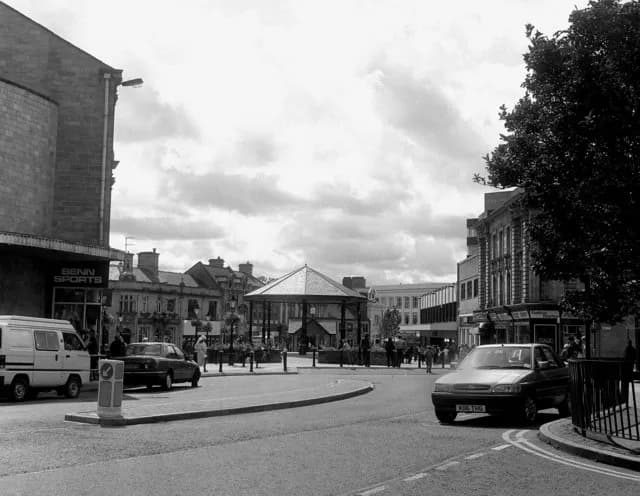
Burnley sits in the heart of Lancashire, a town shaped by centuries of textile manufacturing and surrounded by the rolling hills of the Pennines. Its story mirrors that of many Lancashire mill towns, yet retains a distinct character rooted in its landscape and community.
The Town Centre Today
Burnley's town centre reflects its working heritage while serving contemporary needs. Parts of the centre have been pedestrianised, creating space for shoppers and visitors to move between the traditional market, modern retail units, and historic buildings. The view from the railway viaduct offers a striking perspective across the town, revealing how the urban core sits within the broader landscape of East Lancashire.
Textile Heritage
For generations, Burnley's economy revolved around cotton weaving. The town's mills, many of which still stand, powered the local economy and employed thousands of residents. While the industry has diminished, the physical reminders remain: the grand mill buildings, the weavers' cottages, and the street layouts designed around factory life. This heritage is woven into the town's identity and continues to influence how Burnley sees itself.
Location and Landscape
Burnley occupies a valley position where the River Brun meets the River Calder. The surrounding countryside offers walking routes into the South Pennines, with the town acting as a gateway between urban Lancashire and the moorland hills. This location has shaped both the town's development and its relationship with neighbouring settlements such as Colne and Nelson.
Community and Identity
Like many post-industrial Lancashire towns, Burnley has undergone significant change. The transition from manufacturing to service-based employment has brought challenges, but also opportunities for reinvention. The town retains a strong sense of local identity, with community institutions, sporting culture, and civic pride remaining central to daily life.
Visiting Burnley
For those exploring the town, the centre offers a mix of independent shops and familiar chains. The market continues a tradition of trade that predates the industrial era. Beyond the immediate town centre, the surrounding area provides access to walking routes, historic villages, and the distinctive Lancashire landscape of mills, canals, and moorland.
Burnley represents a particular strand of northern English identity: proud of its past, facing the present with pragmatism, and shaped by the interplay between industry and landscape that defines this corner of Lancashire.